2.4 “Zero Distance” to Sea Views
The Development of “Four Stages of Fence-free Design”

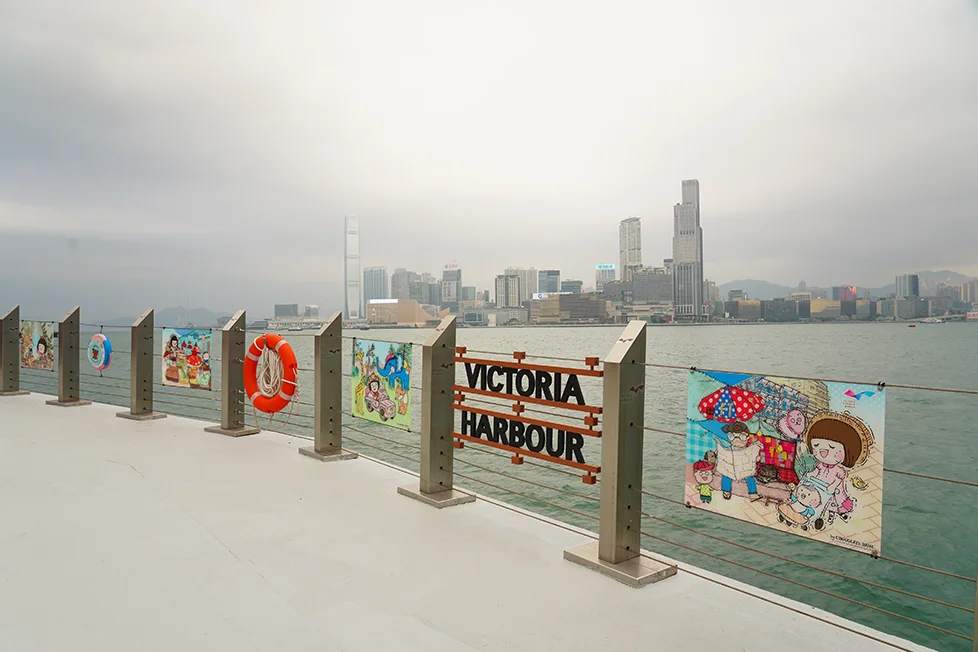
Stage One: Removable Fences

Removable steel cables are used as fences in the Water Sports and Recreation Precinct in Wan Chai. Visually unobtrusive, they allow visitors to enjoy the sea view without obstruction. The design also makes it easy to remove, facilitating the organisation of water activities.
Stage Two: Sloping Sea Wall & Kerb

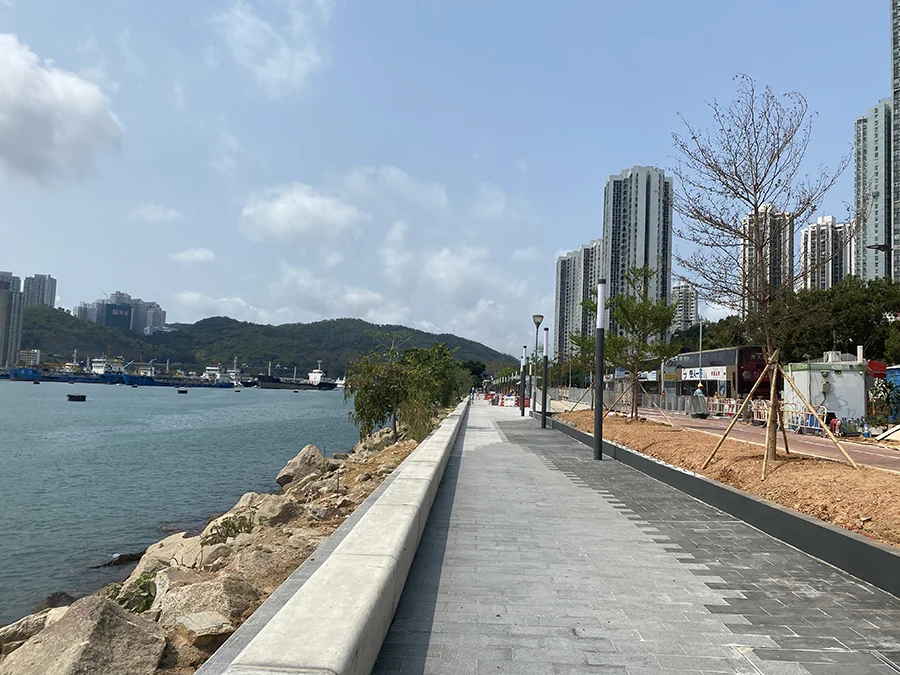
In the Tsuen Wan Promenade, fences are replaced by low kerbs at the height of a standard bench. On the one hand, it can separate visitors from the water body, and on the other hand, it allows visitors to sit on the stone kerb and enjoy views of the Rambler Channel and Tsing Yi Island, thus bringing visitors closer to the water.
Stage Three: Fence-free Breakwater

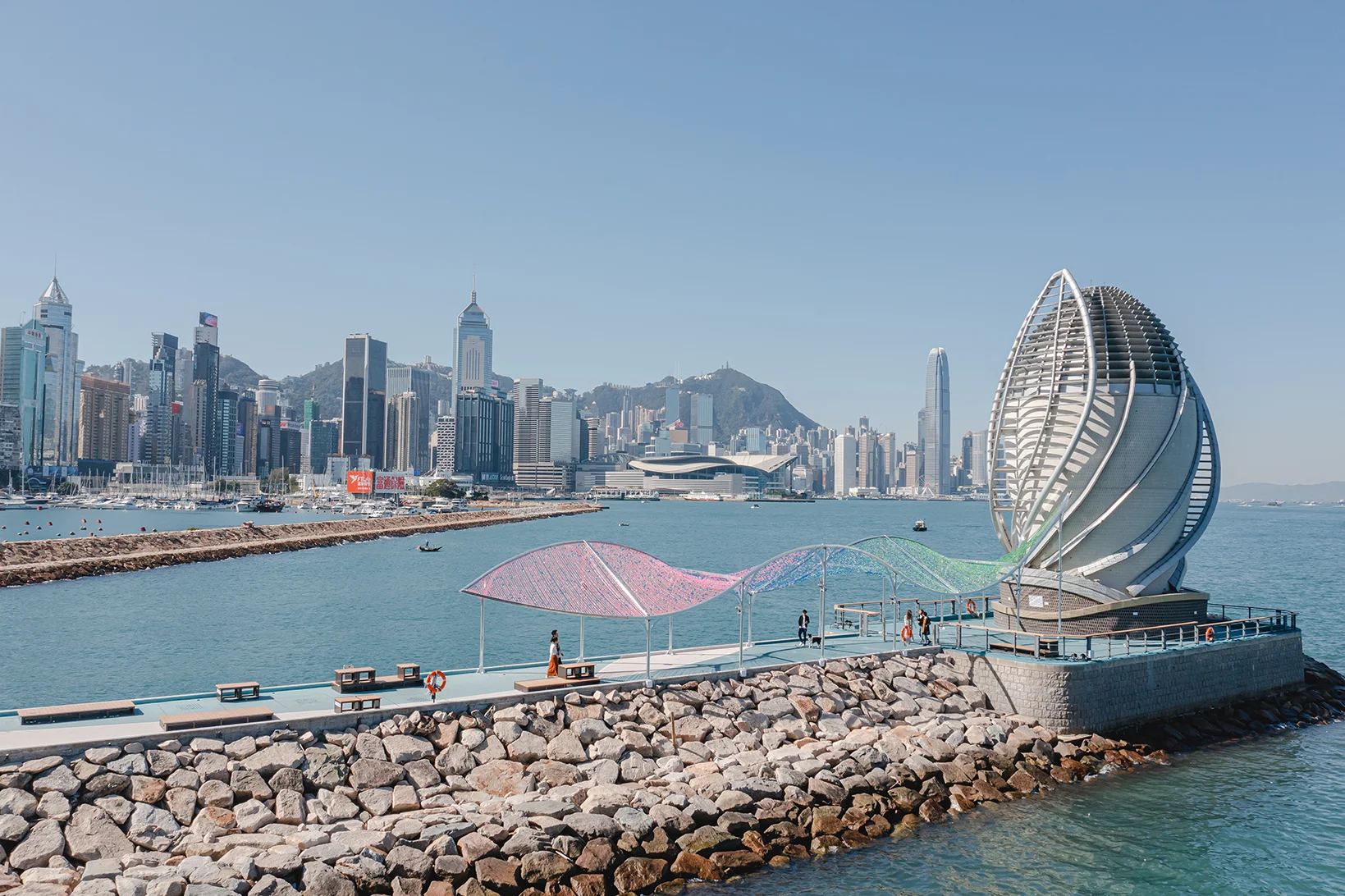
The East Coast Park Precinct in North Point has a 100-metre-long breakwater with no fence on both sides and unique seating. At the end of the breakwater is a specially designed vent shaft for the Central-Wan Chai Bypass, which offers nearly 360-degree views of Victoria Harbour. This site has become a popular photo spot and even graced travel magazine covers, demonstrating the success of the fence-free design and fostering confidence to further its implementation in projects along Victoria Harbour.
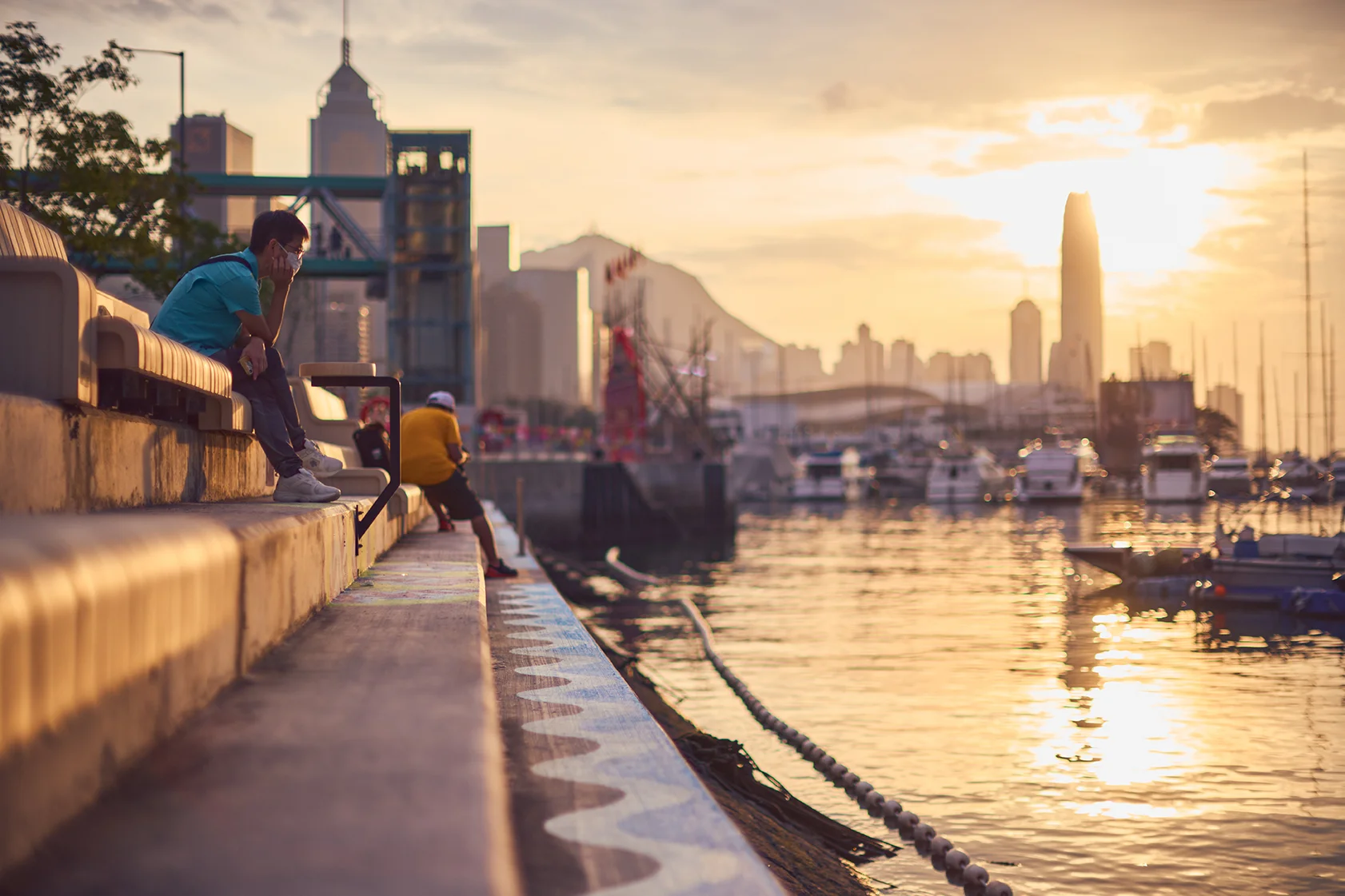
Stage Four: Harbour Steps

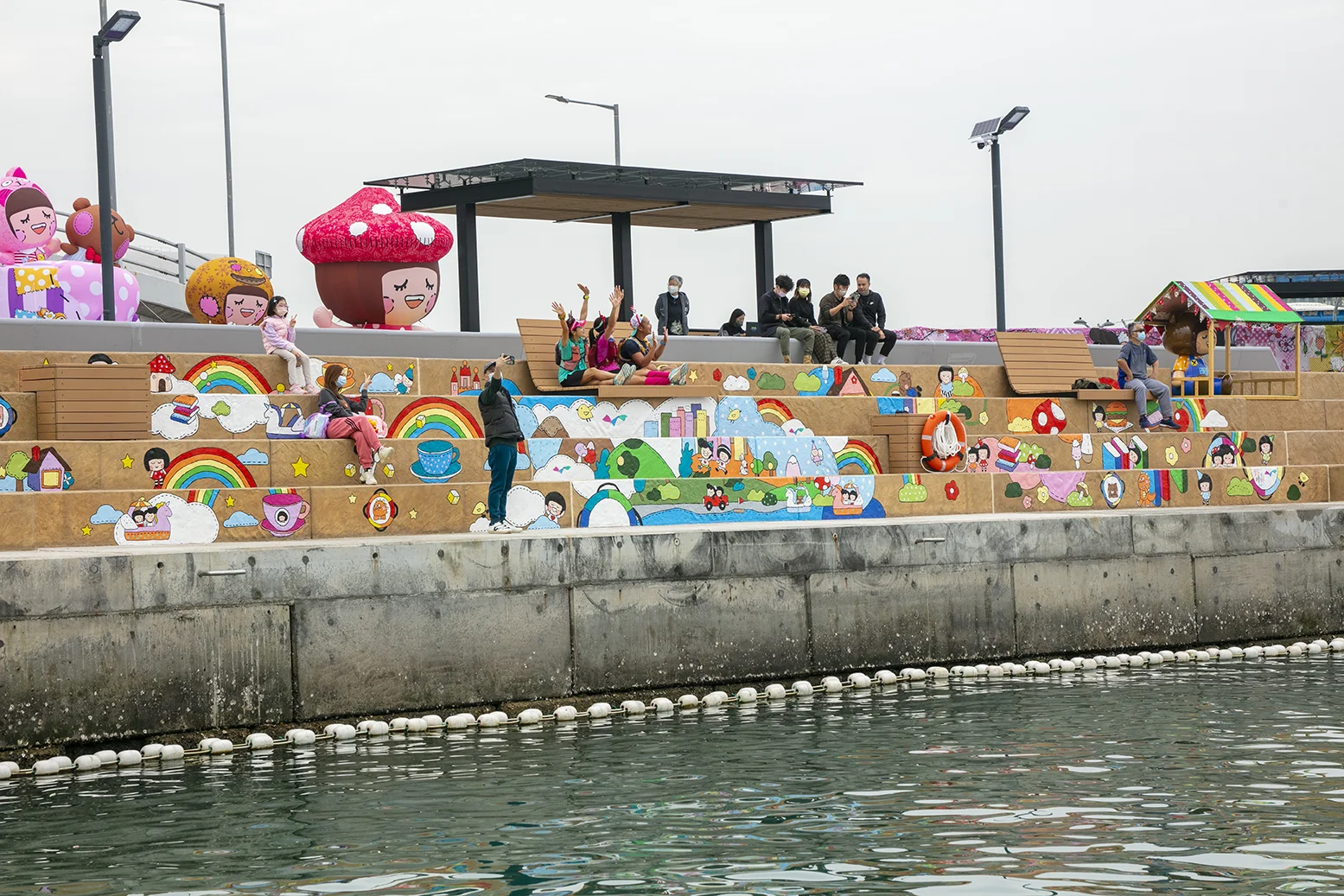
The Water Sports and Recreation Precinct in Wan Chai and the Revitalised Typhoon Shelter Precinct in Causeway Bay both adopted the design of fence-free, tiered harbour steps, allowing visitors to get close to the water. These steps also can serve as spectator stands for watching water sports activities, such as sailing and dragon boat races, and other performances.
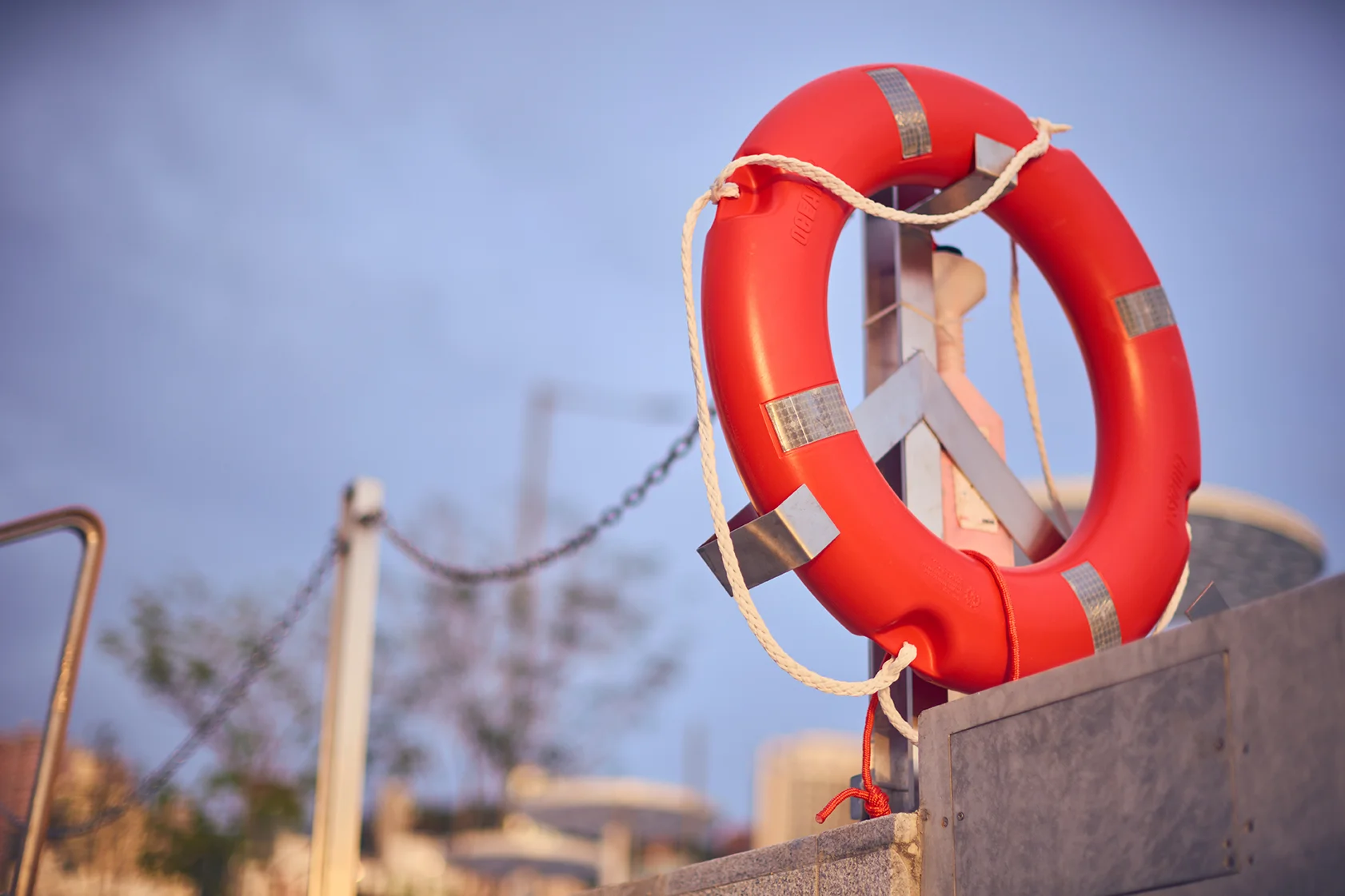
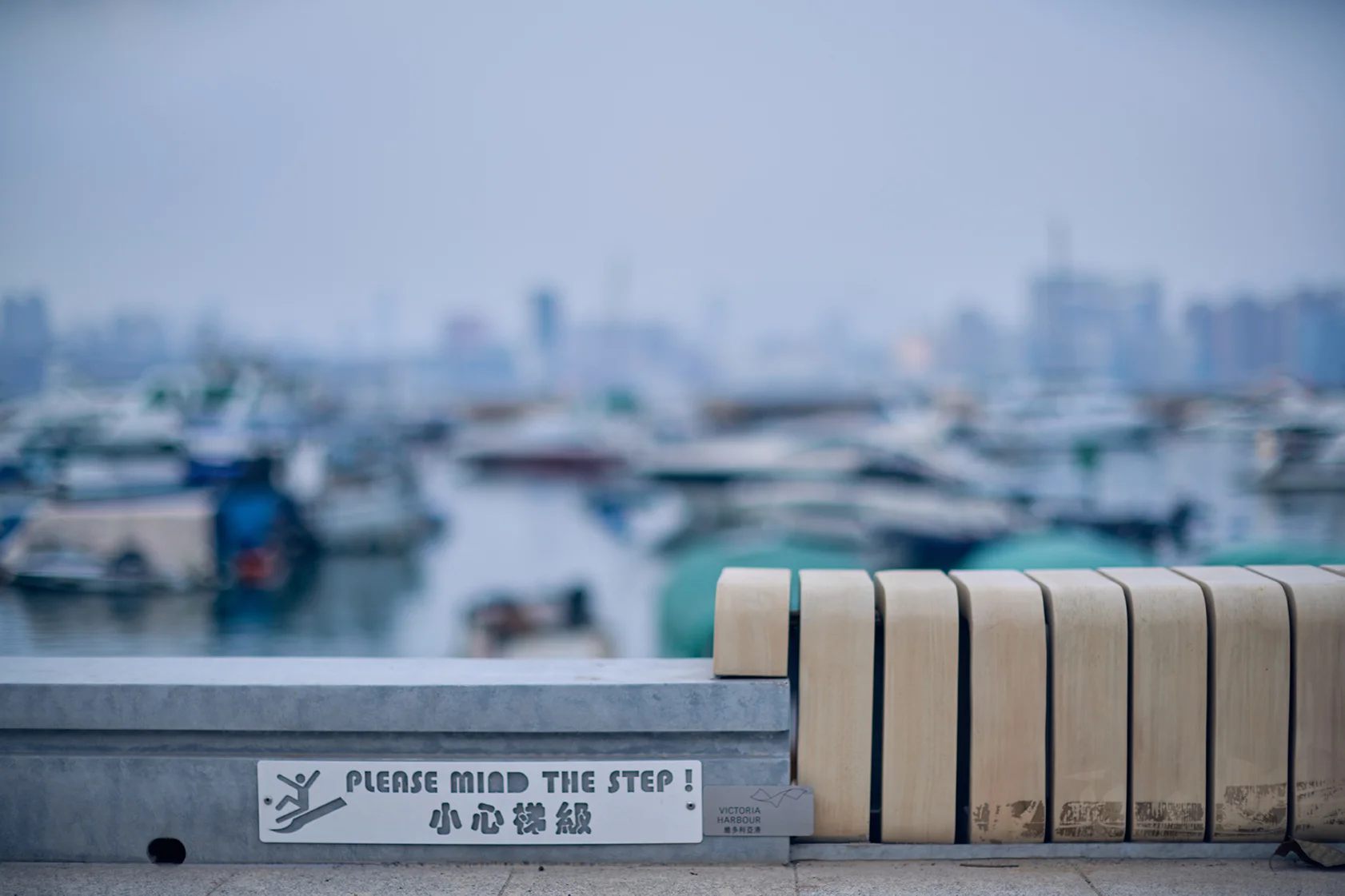
While implementing the “Four Stages of Fence-Free Designs”, the Harbourfront Commission and the Harbour Office of the Development Bureau have made reference to international experiences, such as placing safety notices at different spots along the breakwater and providing life buoys and other life-saving equipment. In terms of management, apart from general on-site security guards, dedicated security guards are also arranged to patrol the breakwater round the clock to closely monitor the situation, alert visitors when needed, and provide assistance when necessary.

Harbourfront Enhancement Committee's Task Group on Management Model
Learning Trip to Australia

To facilitate knowledge exchange and learn about the best practices of harbourfront development worldwide, the former Harbour-front Enhancement Committee's Task Group on Management Model visited cities such as Liverpool, London, Singapore, Sydney, San Francisco, and Vancouver to gain insights for transforming waterfront areas into vibrant, multi-functional spaces imbued with local history and heritage. Learning from global examples, the group explored strategies for creating thriving mixed-use developments that cater to both residents and visitors while preserving the characteristics of each area.

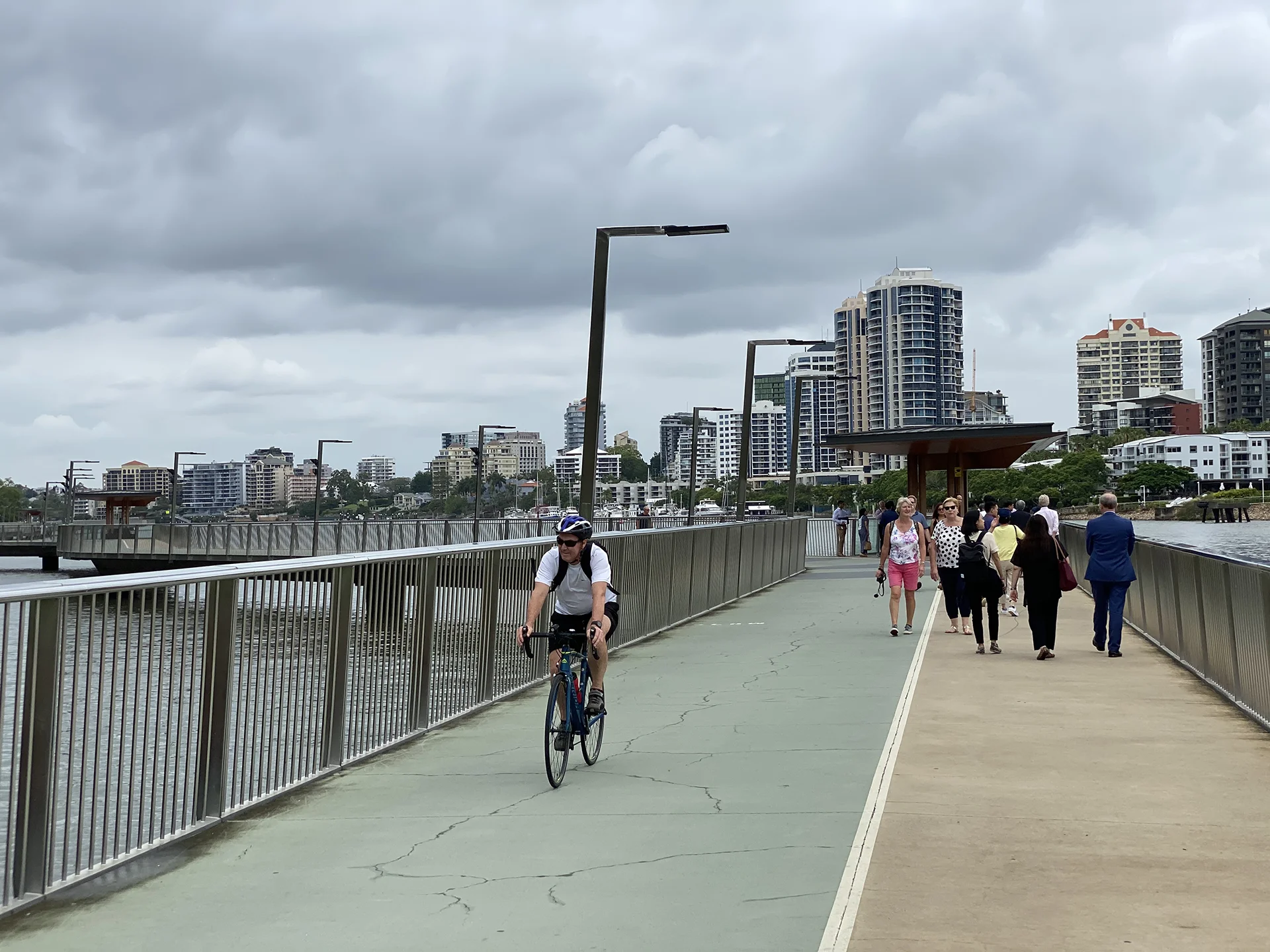
The shared path along the Brisbane River walkway.
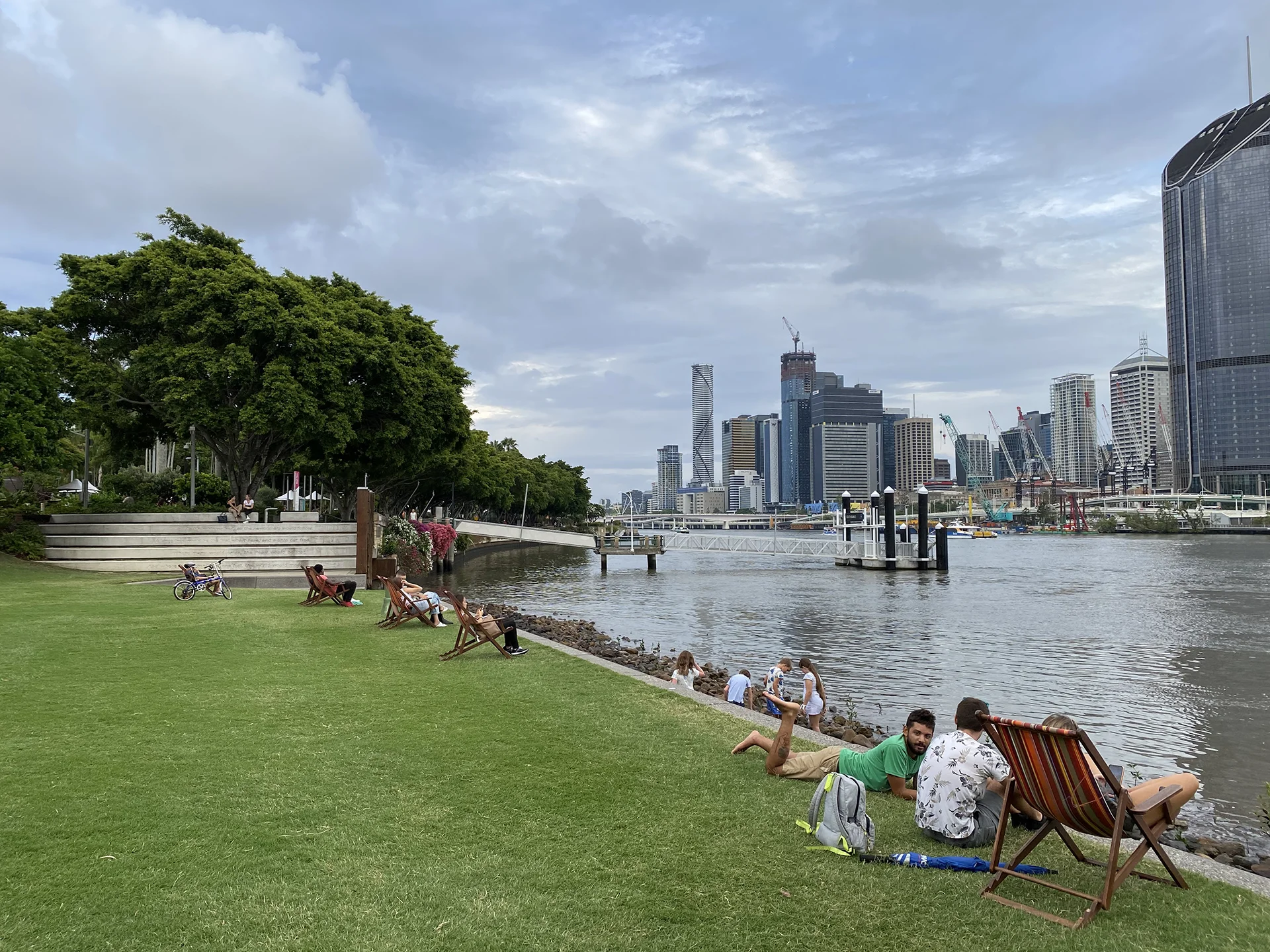
The lawn area on the south bank of the Brisbane River features fence-less tiered seating along the waterfront, providing convenient rest spots for visitors and allowing them to get closer to the water.

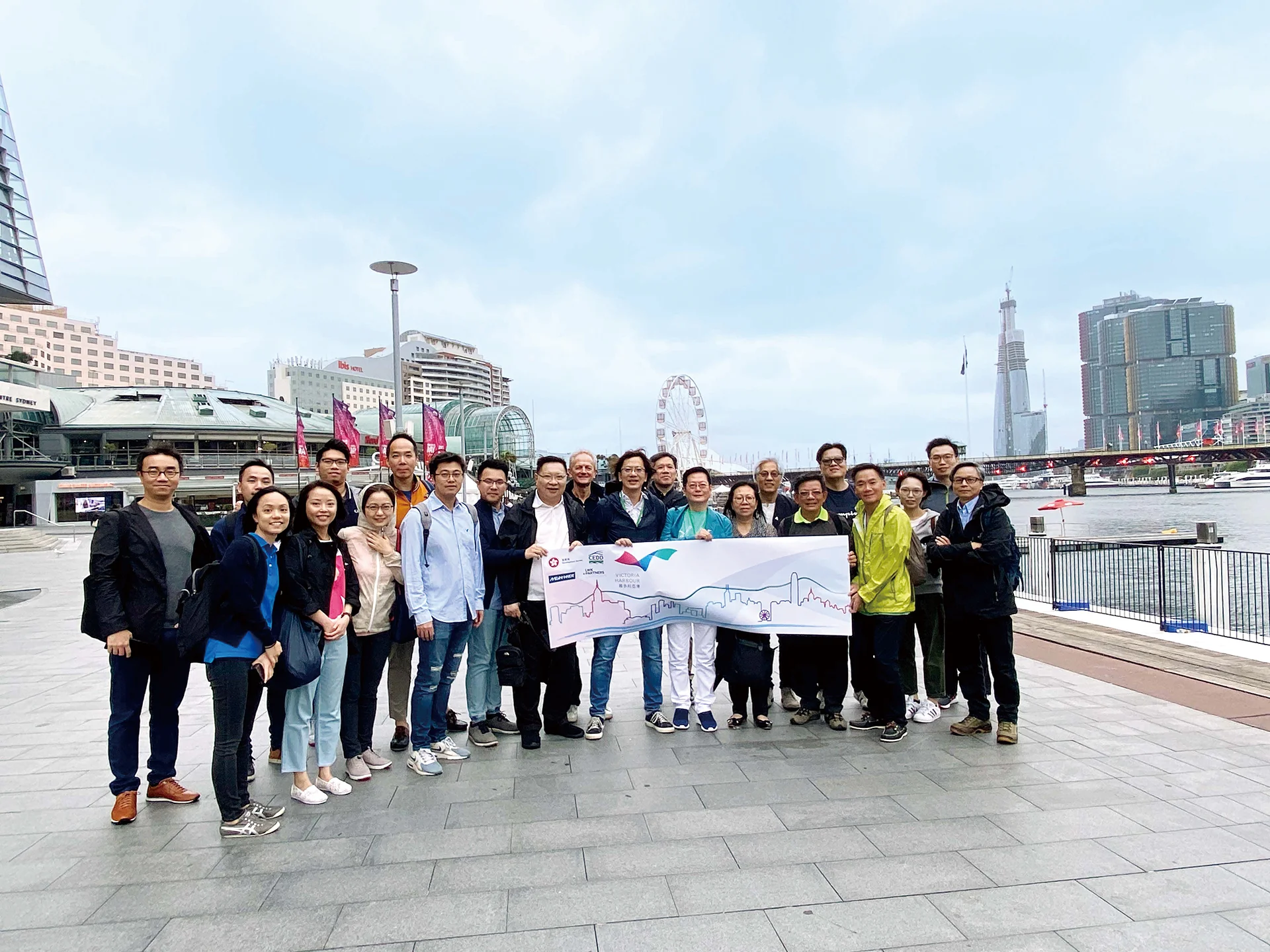
The Harbourfront Commission extended its exploration to Brisbane and Sydney in Australia in January 2020. With a focus on gauging inspiration for the planned Boardwalk Underneath Island Eastern Corridor and other harborfront areas, apart from representatives of the Harbourfront Commission, the delegation comprised representatives from the Civil Engineering and Development Department, Harbour Office of the Development Bureau and project consultants.

A group photo of the delegation after visiting Darling Harbour.

During their visit to Brisbane and Sydney, the delegation not only delved into the details of boardwalk design and movable bridges but also observed innovative approaches to enhancing waterfront vibrancy. From water-land interface facilities for streamlined water sports experiences to shared walkways accommodating different users, the exploration encompassed strategies for integrating cultural and entertainment elements, shaded and green spaces, as well as public-private partnerships. Engagements with local authorities and project teams gave the delegation valuable insights into the planning, management, and technical aspects of waterfront projects across the inception, design, and execution phases. Drawing from successful international cases with interesting takeaways, the delegation was inspired to formulate actionable designs for the construction, management, and maintenance of the envisioned Boardwalk for expected launch in phases between end 2024 and end 2025.

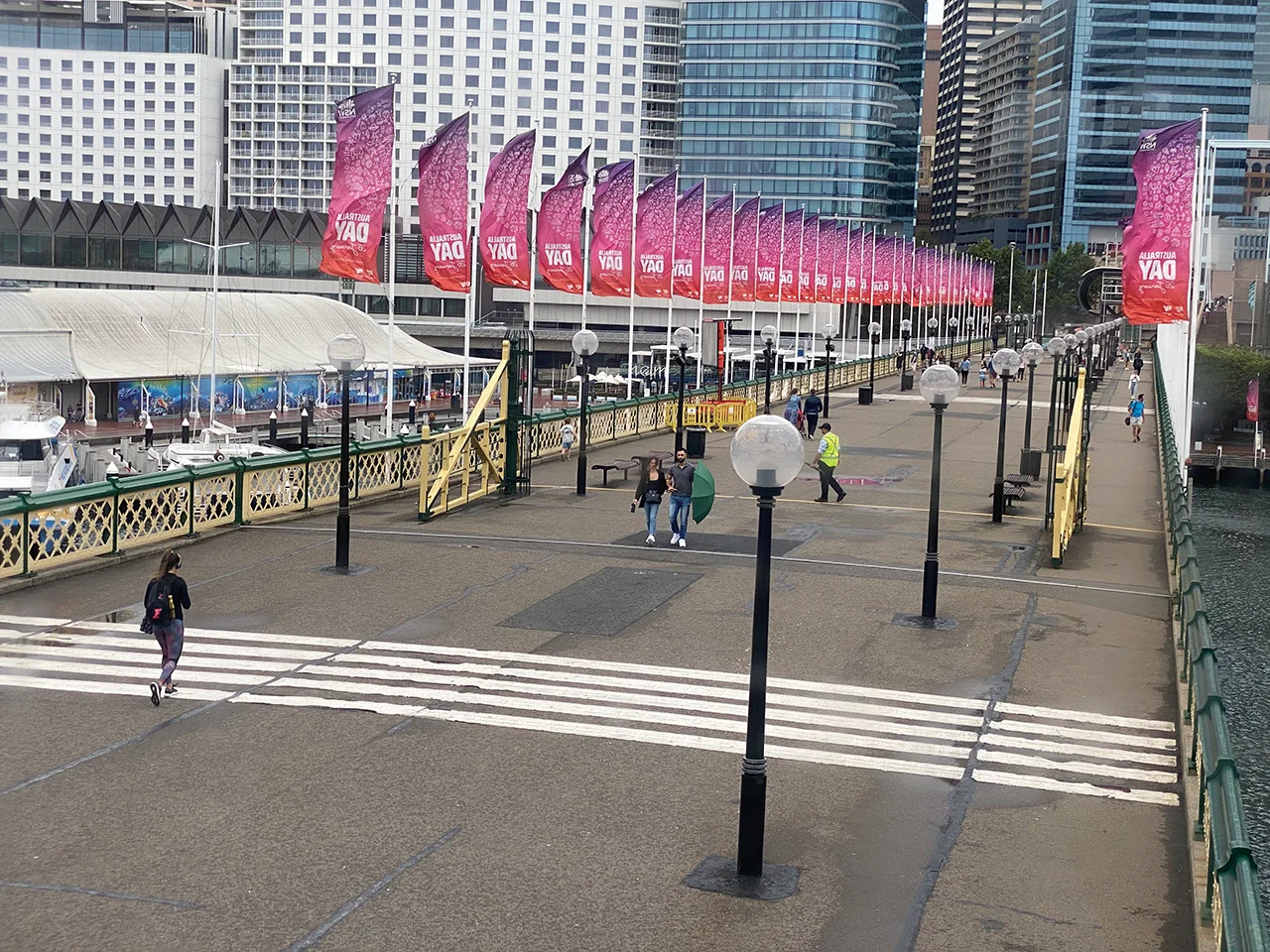
The Pyrmont Bridge at Darling Harbour is one of the oldest surviving electrically operated swing bridges in the world.
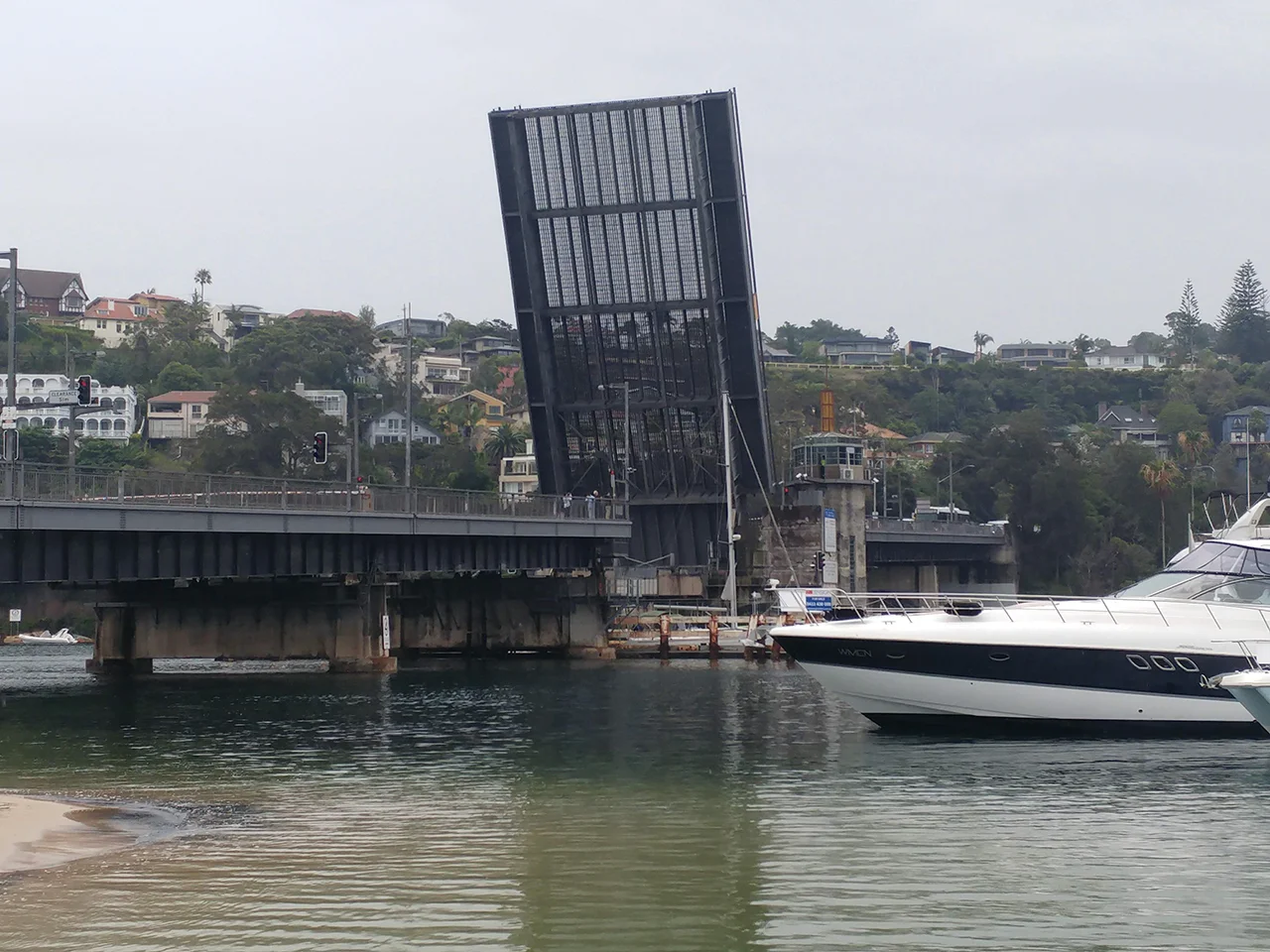
The Spit Bridge, spanning across the Middle Harbour in Sydney, is a lift bridge constructed with reinforced concrete.

Postscript

Ms Alice PANG

When two entities of contrasting natures – one being the ebullient and energetic ocean and the other being solid and stable land - come into contact on the harbourfront, they give rise to enormous room for imagination. Therefore, during our study trip to Australia, the Harbourfront Commission, the Harbour Office under the Development Bureau and the design team of the Civil Engineering and Development Department not only looked into the technical details, but also made an in-depth exploration of the various possibilities of harbourfront revitalisation through inspiration from on-site observations and exchanges. In particular, we studied how to blend the gentleness of the water body, the robustness of the embankment, and public aspiration for heart-warming experiences in creating a lively, vibrant and relaxing space in a busy and bustling city. Out of the conference room, we conducted our discussion on a seaside bridge. The sound of waves and shade of trees brought out our creativity, enhancing our interactions. What came out from our discussion not only was constructive to boardwalk projects, but also laid a solid foundation for the collaboration among the works team, the Harbour Office under the Development Bureau and the Harbourfront Commission. It was also advantageous to the implementation of many other harbourfront projects.

Information about Harbourfront Friends

Ms Alice PANG

Former Project Manager (South),

Civil Engineering and Development Department

Ms Alice PANG served in the Government for 33 years. She joined the Government as Assistant Engineer in September 1990 and served in the former Civil Engineering Department, the Development Bureau and the Civil Engineering and Development Department. She was promoted to Principal Government Engineer in June 2017. She served as the Director of Drainage Services from November 2020 to September 2023, and commenced her pre-retirement leave afterwards. During her tenure as Project Manager (South) of the Civil Engineering and Development Department, Ms PANG led the department's team, together with members of the Harbourfront Commission, to conduct a field trip to Australia in January 2010.

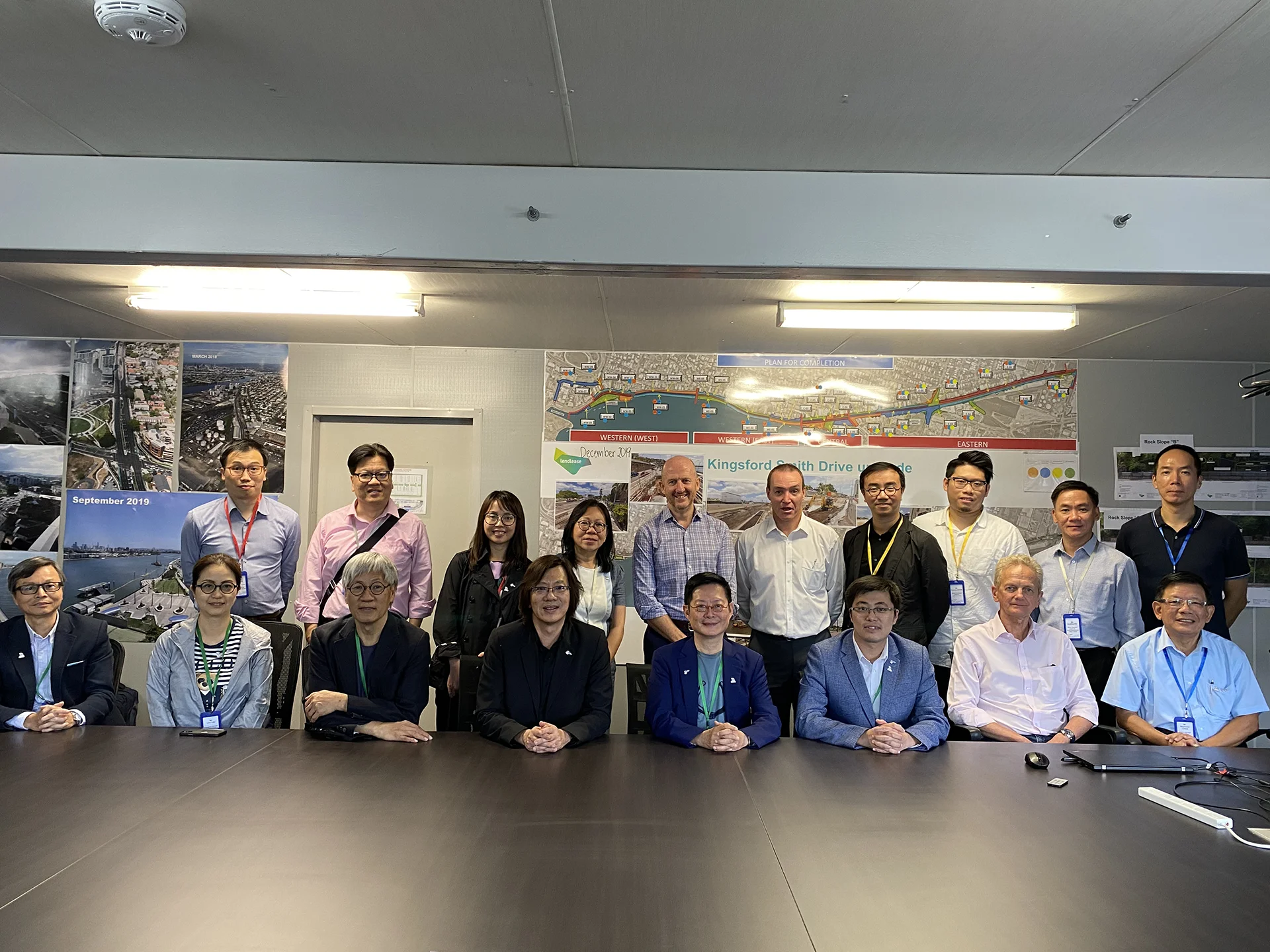
Ms Alice PANG (back row, fourth left), former Project Manager (South) of the Civil Engineering and Development Department, exchanged views with Members of the Harbourfront Commission and the project team of Kingsford Smith Riverwalk.